 0807178000008071780000
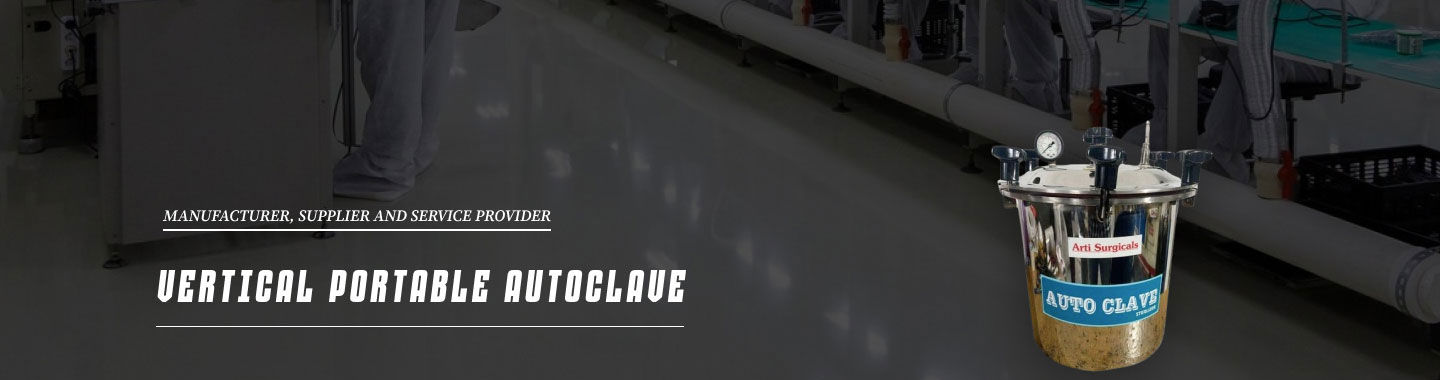
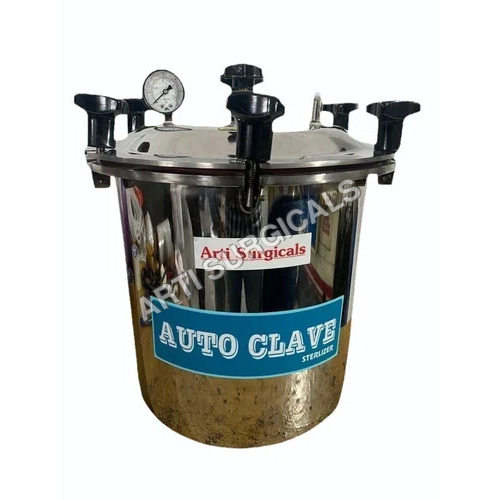
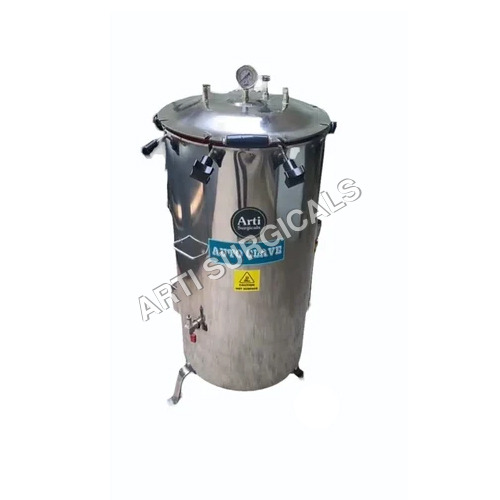
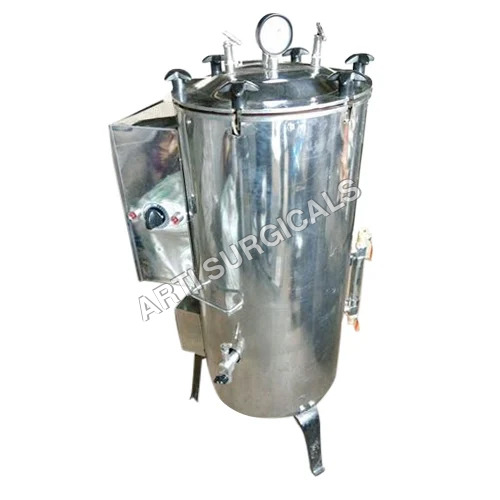
Autoclave Pressure Cooker
140000 INR/Unit
Product Details:
- Voltage 220-240 Volt (v)
- Material SS
- Usage Industrial
- Application Industrial
- Product Type Autoclave Pressure Cooker
- Operate Method Semi Automatic
- Color Silver
- Click to view more
X
Autoclave Pressure Cooker Price And Quantity
- 1 Unit
- 140000 INR/Unit
Autoclave Pressure Cooker Product Specifications
- Semi Automatic
- Autoclave Pressure Cooker
- Silver
- 220-240 Volt (v)
- Industrial
- Industrial
- SS
Autoclave Pressure Cooker Trade Information
- Cash in Advance (CID)
- 20 Unit Per Week
- 7 Days
- Asia, Australia, Central America, North America, South America, Eastern Europe, Western Europe, Middle East, Africa
- , All India, South India, Central India, West India, North India, East India, Gujarat, Karnataka, Kerala, Lakshadweep, Mizoram, Meghalaya, Manipur, Andhra Pradesh, Bihar, Chandigarh, Daman and Diu, Goa, Jharkhand, Odisha, Punjab, Assam, Delhi, Dadra and Nagar Haveli, Andaman and Nicobar Islands, Arunachal Pradesh, Chhattisgarh, Haryana, Himachal Pradesh, Jammu and Kashmir, Madhya Pradesh, Maharashtra, Nagaland, Rajasthan, Sikkim, Tamil Nadu, Telangana, Tripura, Pondicherry, Uttar Pradesh, Uttarakhand, West Bengal
Product Description
| apacity Range | 50 - 500 liters (custom sizes available) |
| Operating Pressure | 1.0 - 2.2 bar (14.5 - 32 psi) |
| Operating Temperature | 110C - 134C |
| Construction Material | Stainless Steel 304/316 (food grade, corrosion-resistant) |
| Chamber Type | Horizontal cylindrical / vertical |
| Control System | Digital PLC-based / Manual options available |
| Heating Method | Electric / Steam (Direct or Indirect) |
| Safety Features | Pressure release valve, door interlock, over-temperature protection |
| Sterilization Time | 15 - 60 minutes (adjustable depending on contents) |
| Water Supply | Direct water line / Manual fill |
| Drain System | Automatic / Manual drain |
| Insulation | High-density PUF insulation to reduce heat loss |
| Power Supply | 220V - 440V, 3-phase, 50/60 Hz |
| Compliance | ISO 13485, CE, GMP compliant |
What is a cooker autoclave used for?
A: Cooker autoclaves are used to sterilize equipment, utensils, and food items using high-pressure steam. Common in food processing, medical waste treatment, and laboratories.
Q2. Can it be used for food sterilization?
A: Yes, cooker autoclaves are ideal for sterilizing packaged or canned foods to extend shelf life and ensure safety.
Q3. What materials can be sterilized?
A: Metals, glass, and certain plastics can be safely sterilized. Organic and perishable items like food can also be cooked and sterilized.
Q4. Is training required to operate it?
A: Basic training is recommended, especially for digital PLC systems. Manuals and training videos are usually provided.
Q5. How often should maintenance be done?
A: Preventive maintenance is suggested every 6-12 months, depending on usage. Safety valves and gaskets should be inspected regularly.
Q6. Are cooker autoclaves customizable?
A: Yes, most manufacturers offer customization for capacity, automation level, material, and other features.
Q7. What safety measures are included?
A: Door interlocks, pressure relief valves, thermal cut-offs, and alarms for overpressure/temperature are standard.
Q8. How long does a sterilization cycle take?
A: Average cycle time is 30-60 minutes, depending on load size and content.
Q9. What is the difference between a cooker autoclave and a regular autoclave?
A: Cooker autoclaves often reach higher capacities and are designed specifically for food or waste treatment applications, whereas standard autoclaves are mostly used for medical or lab sterilization.
Q10. What power source is needed?
A: Typically 3-phase electricity, though single-phase versions may be available for smaller units.
Efficient Industrial Sterilization
Engineered for heavy-duty performance, this Autoclave Pressure Cooker delivers reliable sterilization for industrial use. Its stainless steel construction offers durability and corrosion resistance, making it ideal for rigorous, long-term applications. The unit simplifies the sterilization process, ensuring sterile results every time.
Semi-Automatic Operation for Ease
Featuring a semi-automatic operate method, the autoclave balances manual control with automation. This approach enables precise user input while reducing the risk of operational errors, all while supporting continuous tasks within industrial environments.
Versatile Applications Across Industries
Adaptable for a broad spectrum of industrial applications, the autoclave pressure cooker is suitable for laboratories, medical, and manufacturing settings. Its robust build and industrial-grade performance meet the stringent requirements often found in such fields.
FAQs of Autoclave Pressure Cooker:
Q: How does the Autoclave Pressure Cooker operate in an industrial setting?
A: The autoclave pressure cooker features a semi-automatic operation, combining manual input with automated processes for efficient and reliable sterilization. Users set the required parameters, and the machine manages the sterilization cycle, ensuring consistent results.Q: What industrial applications can benefit from this autoclave?
A: This autoclave is suited for diverse industrial environments such as laboratories, pharmaceutical companies, medical facilities, and manufacturing plants. It excels in sterilizing equipment, instruments, and other items requiring complete decontamination.Q: When should I use the Autoclave Pressure Cooker for sterilization tasks?
A: You should use the autoclave whenever sterilization or high-temperature decontamination is necessary, such as before using equipment in sensitive operations, after every batch process, or during scheduled facility cleaning routines.Q: Where can this autoclave be installed and utilized within an industrial facility?
A: This autoclave can be installed in designated sterilization rooms, laboratory workspaces, production floors, or any area with proper electrical (220-240V) support, sturdy surfaces, and adequate ventilation.Q: What is the process involved in operating the semi-automatic autoclave?
A: To operate, load the items to be sterilized, set the required temperature and pressure parameters, and start the cycle. The autoclave will automatically regulate the pressure and timing, while manual oversight ensures safety and efficiency.Q: How does the stainless steel material benefit the autoclaves performance?
A: Stainless steel construction provides the autoclave with excellent resistance to corrosion, high durability, and the ability to withstand repeated high-temperature cycles, promoting hygiene and a long operational lifespan.Q: What advantages does this autoclave offer industrial suppliers and manufacturers in India?
A: This device supports heavy-duty, continuous usage, features user-friendly controls, and offers consistent sterilization results, making it a valuable asset for distributors, manufacturers, and suppliers seeking reliable, scalable solutions in industrial settings.Tell us about your requirement

Price:
Quantity
Select Unit
- 50
- 100
- 200
- 250
- 500
- 1000+
Additional detail
Mobile number
Email

Other Products in 'Laboratory Autoclave' category

Contact Details

- Gala No. 9, Delta Ind. Estate, Bhoidapada, Vasai East,Vasai - 401208, Maharashtra, India
- Phone : 08071780000
ARTI SURGICALS
GST : 27CZJPP8606F1Z0
GST : 27CZJPP8606F1Z0

- Mr. Rakesh (Proprietor)
- Mobile : 08071780000
- Send Inquiry
 Send Inquiry
ARTI SURGICALS
All Rights Reserved.(Terms of Use)
Developed and Managed by Infocom Network Private Limited.
Developed and Managed by Infocom Network Private Limited.

